Printable worksheets for kids: why tracing your child's own name works better than the alphabet
23 September 2026
Letter tracing is one of the oldest and most common exercises in children's worksheets — and for good reason. It's the first step in developing writing motor skills, before a child starts forming words on their own. But most tracing worksheets online are built the same way: the alphabet in order, A to Z, regardless of which specific child is filling them in.
Why the order itself isn't the most important part
Tracing the alphabet in sequence gives a child structure, but not necessarily motivation. A child tracing the letter "Q" simply because it comes after "P" doesn't feel a particular connection to it. The motor exercise happens, but emotional engagement stays weak.
What changes when a child traces their own name
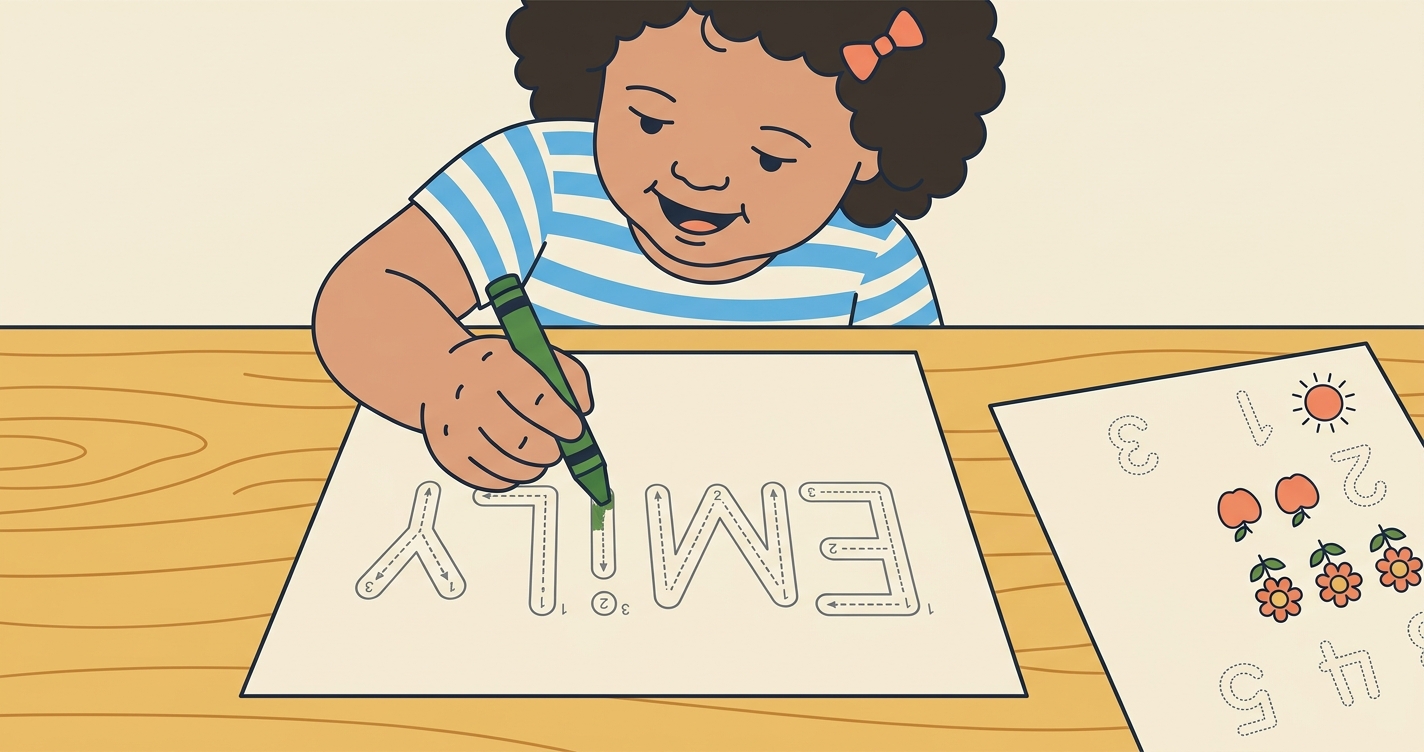
When the first letters a child learns to trace are their own name, the exercise becomes something personal. The child isn't tracing a random letter — they're writing something that belongs to them. This strengthens:
Motivation. Children are naturally interested in their own name — it's one of the first words they recognise in print, even before they can read.
Letter-sound connections. When a child traces the letters of their name, they often hear those letters spoken aloud at the same time ("S for Sofia starts with") — this builds a stronger connection between the written letter and the sound than a random alphabet sequence does.
A sense of pride. A finished, correctly written version of their own name gives a child a tangible sense of achievement — something they can show a parent and feel proud of.
When alphabetical order still makes sense
This isn't an either/or choice. Once a child is confident tracing their own name, broader alphabet practice is a natural next step — now built on a stronger motor foundation and letter-sound connection that name tracing helped establish.
How Kindlo applies this
Kindlo's tracing worksheets start with a child's own name — the name entered in their profile appears directly on the worksheet, in large, clear traceable letters. From there, the exercise naturally expands to other letters and short words, always adapting to the child's current level.
Curious what a tracing worksheet with your child's name would look like? Try a free sample worksheet — 30 seconds, no sign-up required.