
Why handwriting matters more than ever
4 August 2026
Most children today encounter a screen before they encounter a pencil. Smartphones, tablets, digital learning at school — all of it has turned handwriting into something you have to seek out deliberately, rather than a given part of childhood.
But handwriting isn't just a fading skill that technology has "replaced." Research shows it has a direct effect on how a child thinks, learns, and remembers.
Handwriting activates the brain differently than typing
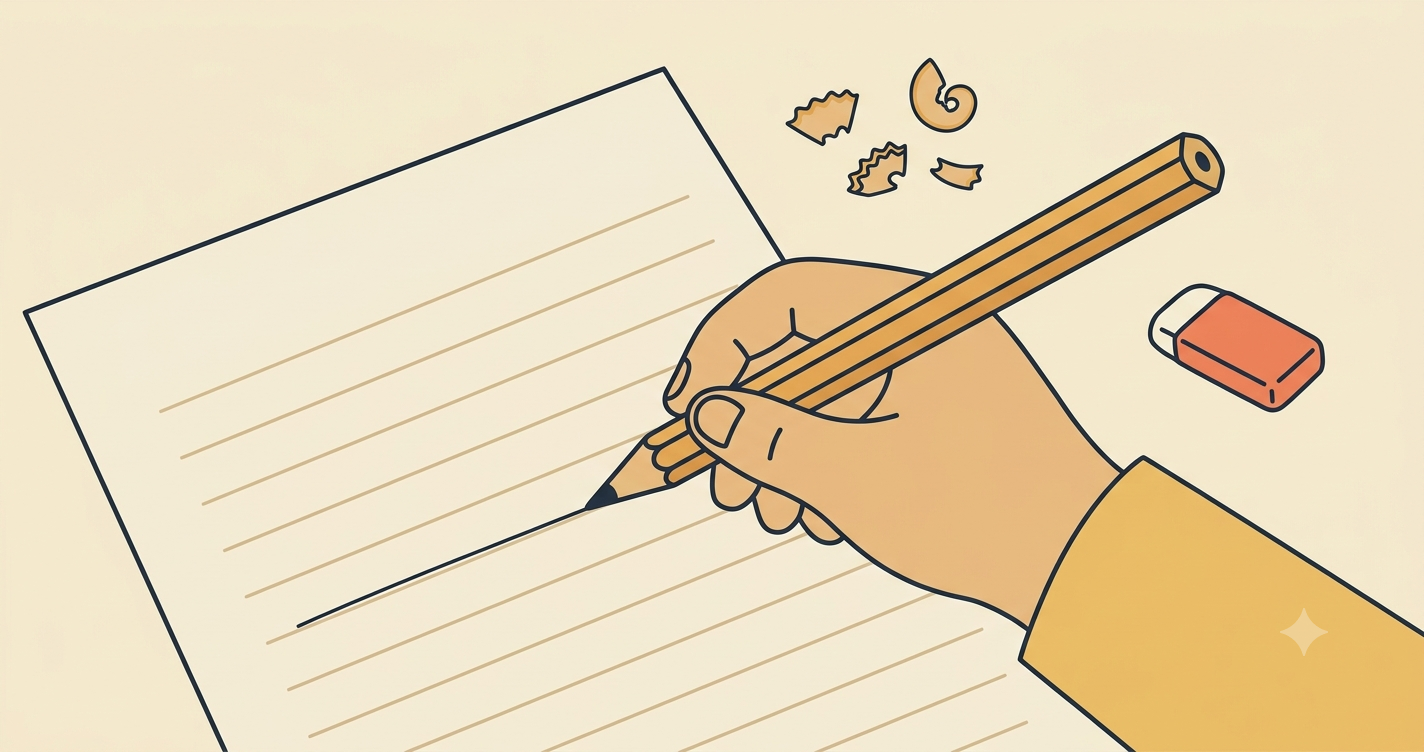
When a child writes a letter by hand, they have to form its shape themselves — every line, every curve is their own movement. When typing, a child selects the same letter from a keyboard, without ever creating its shape.
That difference isn't trivial. Brain research has repeatedly shown that handwriting activates more brain regions at once, including areas linked to reading development and memory formation. Children who learn to write by hand later recognise letters more easily and read faster.
It slows thinking down — in a good way
Handwriting is slower than typing. At first glance that seems like a drawback, but it's actually part of the value.
When a child has to write more slowly, they have more time to process what they're writing. It forces them to think about the content rather than mechanically reproducing words. That slowness is part of why handwritten notes have been shown to improve learning more than typed notes, even in studies with older children and adults.
Fine motor development
Holding a pencil, applying the right pressure, controlling a line — these are all fine motor skills a child builds every time they write or draw by hand. These skills matter beyond writing itself; they're connected to general dexterity a child uses throughout life, from buttoning a shirt to playing an instrument.
Why paper, not just a tablet with a stylus?
To be fair here: digital writing with a stylus offers some of the same benefits — the hand still moves, the letter shape is still created by the child. Kindlo worksheets work both ways, on paper or on a tablet with a stylus, for exactly this reason.
But paper offers one thing a screen can't: genuinely screen-free time. A child's day already contains plenty of screen time — at school, at home, for entertainment. Physical paper and a pencil give a moment where a child isn't looking at any screen at all, with no notifications, no backlight, no distractions.
What this means in practice
There's no need to draw a hard line between handwriting and screens — both can coexist. But it's worth deliberately making room for pencil and paper, rather than letting it quietly disappear into the shadow of screens.
Regular, short handwriting practice — even 10–15 minutes a few times a week — has a real effect on a child's development that no app can replace.
Curious what a personalised worksheet would look like for your child? Try a free sample worksheet — 30 seconds, no sign-up required.